Physical Address
304 North Cardinal St.
Dorchester Center, MA 02124
Physical Address
304 North Cardinal St.
Dorchester Center, MA 02124


Castor oil farming is one of the most effective crops for adapting to climate change. This is because it can be grown in arid and semi-arid areas. There is high demand for castor oil worldwide as countries commit to renewable energy and reducing greenhouse gas emissions. So, the burning question has always been, “Is castor oil farming in Kenya a profitable business?”

Castor oil is a non-edible biodiesel used to produce vegetable oil and sustainable aviation fuel. It is used in cosmetic products and as a lubricant for racing engines. Furthermore, the protein component in the seeds and nuts can produce animal feeds and bio-fertilisers. Some people believe that it can also be used on wounds for faster healing. Castor oil farming could be your ticket to agricultural success. That said, how is castor oil farming in Kenya done?
This type of farming is rapidly growing and transforming arid and semi-arid regions into thriving agricultural hubs. With this resilient crop, Kenya is tapping into its global demand, empowering local farmers.
This plant is predominantly grown in the regions highlighted below.
Castor production in Kenya is emerging as a promising agricultural sector. However, challenges such as improved processing facilities and farmer training must be addressed to realise the industry’s potential fully. The following are some of the major castor oil manufacturers in Kenya:
This is one of the leading suppliers in Nairobi, Kenya. You can contact them by using the various means shared below.
Address: Jogoo Road, Rikana, Ola Energy Petrol Station Building, Nairobi, Kenya.
Phone: +254 722 706 416
Email: info@kenworksventures.co.ke, kenworksventures@gmail.com
This company manufactures and supplies various types of oils, including castor and Peppermint. You can reach them through:
Email: sales@silverlinechemicals.com
Phone: +91-9810339289
Other local manufacturers in Kenya include Bidco Africa, Kenya Nut Company and Mara Organics Kenya.
These companies represent a mix of large-scale industrial producers and smaller, niche-market companies. You should contact them directly for more detailed information on their products and distribution channels.
Harvesting castor oil involves several steps, from cultivating the plant to extracting the oil from its seeds. Here’s a general guide:
These plants thrive in warm climates with well-drained soils. They prefer a sunny location with temperatures ranging from 20°C to 30°C. The seeds are typically sown directly into the ground after the last frost. Space the seeds about 90 cm apart to allow room for growth.
The seeds are ready for harvest when the pods turn brown and dry. This usually occurs about 140 days after planting. Cut the entire plant or just the seed heads when most pods have matured. Use gloves, as the plant and seeds contain ricin, a toxic compound. Handle with care to avoid skin contact.
Spread the harvested seed pods in a single layer on a tarp or drying surface in direct sunlight. It would help if you allowed them to dry for several days until the pods become brittle and easy to break open.
Once the pods are dry, you can manually break the pods open to release the seeds once they are dry. Alternatively, use a mechanical sheller for larger quantities. Remove any debris or husk remnants from the seeds.
Note that 50% of the weight in the seeds is oil. Therefore, to extract the oil, the seeds are crushed and pressed with a screw oil press.
Filter the extract to remove any remaining solids or impurities. Heat it slightly to improve clarity and reduce moisture content if necessary. The oil should be stored in airtight containers in cool, dark places to maintain quality.
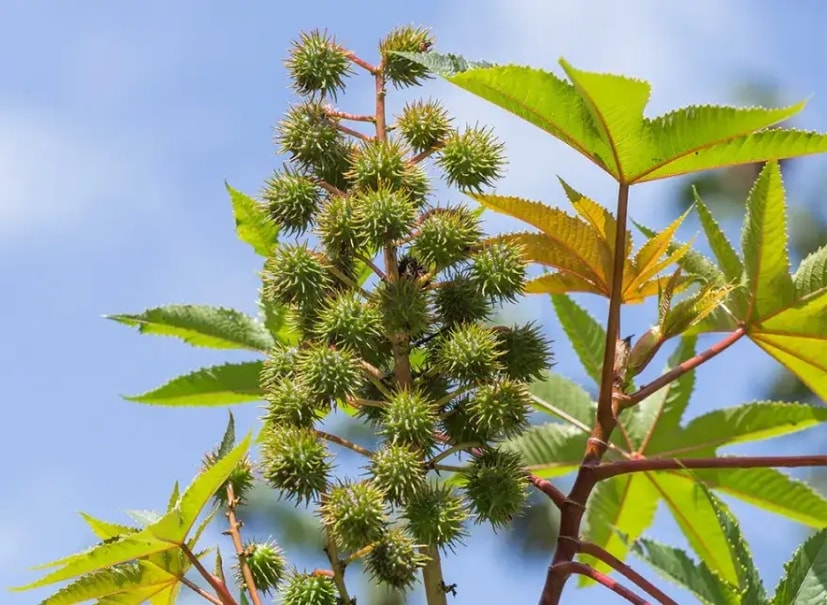
Depending on the climate and variety of the castor plant, castor oil should be ready for harvest in about 140 days. Harvesting begins when the seed pods, known as capsules, start to dry and turn brown. This indicates that the seeds inside are mature and ready for extraction.
According to the Nation, an acre of castor seeds can yield up to 500 kgs of beans annually. Each kilogram fetches around Ksh 50 to Ksh 100. This translates to a potential income of Ksh 25,000 to Ksh 50 0000 per acre, which makes it a viable agricultural venture when managed efficiently.
The cost of castor oil in Kenya varies depending on the quality, brand, and packaging size. According to Jumia Kenya, the prices of castor oil range between Ksh 600 to Ksh 1500. Premium or organic castor oil might be priced higher, especially in speciality health stores or online platforms.
You can purchase castor oil in Kenya from various outlets, including major supermarkets like Carrefour and Naivas. Additionally, castor oil is widely available online on platforms such as Jumia and Kilimall. For bulk purchases, consider contacting the local manufacturers mentioned above.
You can sell castor seeds to local oil extraction companies in Kenya, like Eni SpA. The company is located in Wote, Makueni County and has a capacity of producing 15,000 tons per year since 2022. Additionally, you can contact farmers’ markets and online platforms like go4WorldBusiness and Volza.
With the right approach to choosing quality seeds and understanding the market dynamics, farmers can easily tap into castor oil farming in Kenya. It is crucial to note that, like any agricultural endeavour, success in castor oil farming requires careful planning, consistent management and staying informed about market trends.